Showing posts with label related. Show all posts

Monday, October 19, 2009

How to Choose the Right Beard Shape for Your Face


The Right Beard Shape Can Enhance Your Facial Features

By Dave Alexander, About.com

Properly trimmed and shaped facial hair can go a long way to enhance desirable facial features or take emphasis off weaknesses. While each face will have its own special considerations such as size of mouth, nose, and jawline, there are some general rules for choosing the right facial hair for your face type. Let's look at each.

The Round Face
When shaping the beard for a round face, go a bit longer at the chin to add length and make the face appear less round. Avoid bushy sideburns and keep the sides of the beard short. In lieu of a full beard, a goatee is often a good option for a round face.

The Long Face
Exactly opposite of the round face, the long face requires a beard which is fuller at the sides and shorter at the chin. The goal here is to add width to the sides and make the face appear less long. Make sure to avoid abrupt changes in length so the shaping is not obvious.

The Square Face
Similar to shaping a beard for a long face, the beard for a square face should be shorter at the sides and longer at the chin to add length to the face. Once again, a goatee is also a good option for men with square faces.

The Large Face
Since the face is large, any small facial hair or beard will appear out of proportion and make the face appear bigger. Keep the beard fuller and the mustache larger. Also follow the rules above for the appropriate face shape.

The Small Face
Small faces require small facial hair. Larger, fuller styles will make the face get lost and appear out of proportion. Also follow the rules above for the appropriate face shape.

The Oval Face
You lucky man! The oval face shape is considered the ideal shape and requires no special shaping to balance facial features. Do whatever you like and you'll look great.

For more tips beard care, check out my article on caring for your beard. There are also several beard shapes in my gallery of men's facial hair styles.

Thursday, October 1, 2009

Kedai Labok Machang Kelantan

Kedai Labok terletak dalam Jajahan Machang. Disini terdapat Sekolah Menengah Sains Machang. Lainnya pula terdapat Kampung Joh, Pangkal Kerdas, Tok Bak, Padang Luas juga Tok Kaya. Sungai Bagan pun dekat kawasan ini. Batu 23 pun dekat kawasan Labok. Di Kelantan jika disebut Kedai ia juga bermakna Pekan atau Bandar Kecil atau Bandar. Contohnya Kedai Pulai Chondong bermakna pekan Pulai Chondong. Juga seperti Kedai Lalat dan lainnya.
Posted by Picasa

Wednesday, September 30, 2009

Profess


profess
Verb
1. to claim (something as true), often falsely: he professes not to want the job of prime minister
2. to acknowledge openly: he professed great relief at getting some rest
3. to have as one's belief or religion: most Indonesians profess the Islamic faith [Latin profiteri to confess openly]
ThesaurusLegend: Synonyms Related Words Antonyms
Verb1.profess - practice as a profession, teach, or claim to be knowledgeable about; "She professes organic chemistry"
claim - assert or affirm strongly; state to be true or existing; "He claimed that he killed the burglar"

2.profess - confess one's faith in, or allegiance to; "The terrorists professed allegiance to their country"; "he professes to be a Communist"
declare - state emphatically and authoritatively; "He declared that he needed more money to carry out the task he was charged with"

3.profess - admit (to a wrongdoing); "She confessed that she had taken the money"
acknowledge, admit - declare to be true or admit the existence or reality or truth of; "He admitted his errors"; "She acknowledged that she might have forgotten"
fess up, make a clean breast of, own up - admit or acknowledge a wrongdoing or error; "the writer of the anonymous letter owned up after they identified his handwriting"

4.profess - state freely; "The teacher professed that he was not generous when it came to giving good grades"
declare - state emphatically and authoritatively; "He declared that he needed more money to carry out the task he was charged with"

5.profess - receive into a religious order or congregation
profess - take vows, as in religious order; "she professed herself as a nun"
admit, take on, accept, take - admit into a group or community; "accept students for graduate study"; "We'll have to vote on whether or not to admit a new member"

6.profess - take vows, as in religious order; "she professed herself as a nun"
vow - make a vow; promise; "He vowed never to drink alcohol again"
take the veil - become a nun; "The young woman took the veil after her fiance died"
profess - receive into a religious order or congregation

7.profess - state insincerely; "He professed innocence but later admitted his guilt"; "She pretended not to have known the suicide bomber"; "She pretends to be an expert on wine"
claim - assert or affirm strongly; state to be true or existing; "He claimed that he killed the burglar"
Based on WordNet 3.0, Farlex clipart collection. © 2003-2008 Princeton University, Farlex Inc.

profess

Tuesday, July 21, 2009

Tora! Tora! Tora! (1970)

The Movie...

Tora! Tora! Tora! was an evenhanded look at the Japanese attack on Pearl Harbor that brought the U.S. firmly into World War II. It presented a detailed account of the planning and execution of the attack from both the Japanese and American perspectives. It is a straight-forward narrative of the attack and as such has suffered criticism for being too much like a documentary. Such criticism was muted, however, with the release of Pearl Harbor in 2003, a dubious "Hollywood" effort that suffers greatly in comparison. The aerial action was filmed on location in Hawaii, using many of the sites of the original attack, though scenes at Hickam AFB were somewhat limited due to the heavy airlift activity underway in support of the Vietnam War.


Jack Canary headed a team that created dozens of Japanese Zeros, Kates, and Vals by drastically rebuilding T-6s and BT-13s, while a pair of P-40s were sufficient to provide the meager Air Corps response. Dozens of full-scale fiberglass P-40s were built, using metal frames, C-45 wings, P-40 landing gears, with several of the mock P-40s also equipped with running Allison engines for taxi scenes. These P-40s served as targets during the attacks. Naval Air was represented by several PBYs and a fiberglass Kingfisher mounted on the replicated USS Arizona destroyed during filming.
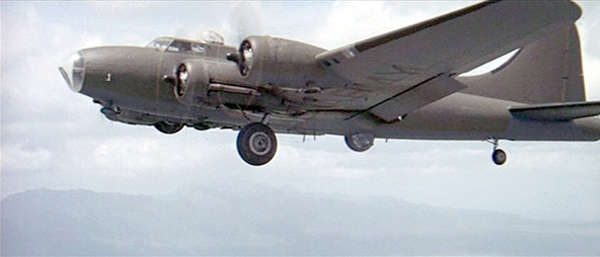
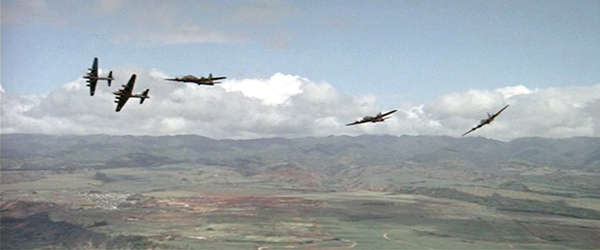
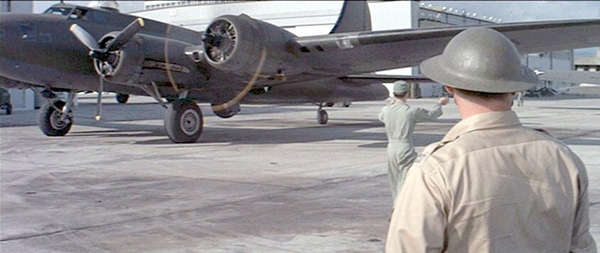
The B-17 footage represented a fairly minor part of the story, that of the ill-timed arrival of elements of the 7th and 19th Bomb Groups during the Japanese attack. As part of the effort to reinforce the Philippine Islands, two reconaissance squadrons were in the process of being deployed to Clark Field. Those B-17s that arrived during the raid were planning a fuel stop at Hickam after a long overnight ferry flight from Hamilton Field, California. Twelve B-17s, a mixture of Cs, Ds, and the new Es, actually did arrive pretty much as depicted in the film, short of fuel and unarmed, their defensive guns useless without ammunition (not aboard the airplanes to allow more fuel to be carried). The B-17s scattered across Oahu, trying to avoid attacking Japanese fighters and desperate American aircraft gunners shooting at anything in the air, the B-17s being the biggest targets presented. All of the B-17s landed successfully, but several were subsequently destroyed during strafing attacks
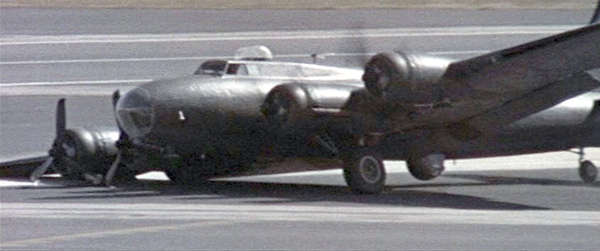
Hired to provide the B-17s for the filming was Aircraft Specialties of Mesa, Arizona, with its five air tanker B-17F and B-17Gs painted in Air Corps camouflage olive drab and medium grey, turrets bolted to the fuselage and Air Corps (oversized) markings added. Aircraft Specialties also was hired to provide the B-17 crews and aircraft maintenance to the entire Tora air force. The filming was scheduled between December 1968 and May 1969, during the off season of fire fighting, and all five B-17s arrived safely from the mainland in late January or early February 1969. The B-17s appear in ground shots but the interesting scenes show the B-17s in formation over Oahu and then circling over Wheeler AFB as they prepare to land. There are numerous interesting B-17 scenes in the film, one of a dramatic go around from a landing approach, the pilot pulling the B-17 through a tight climbing turn to escape a fighter attack.

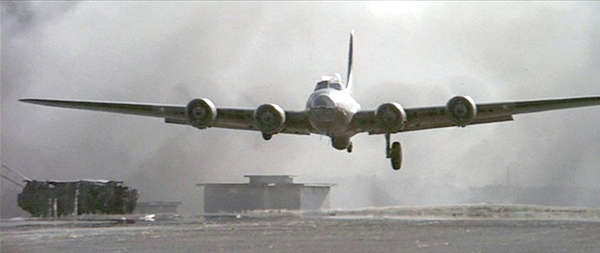
No doubt the most exciting B-17 footage was the one-wheel landing, a scene not planned for the film but only occurring after one B-17 crew could not get the right main landing gear to extend for landing. The unplanned "opportunity" was siezed upon, with movie cameras being set up to record the crash landing. A large smoke generator was set up, and the scene is quite dramatic as the B-17 appears through a wall of smoke, the right gear obviously not extended. The Fortress glides to a landing, and then the right wing settles to the runway with the resultant propeller crunches of number 3 and 4 engines as the airplane swings around it right wing tip in a staggering ground loop.

Monday, July 20, 2009

10 August-15, 1945 JAPAN SURRENDERS


JAPAN SURRENDERS
(August 10-15, 1945)
Events: Dawn of the Atomic Era, 1945

Prior to the atomic attacks on Hiroshima and Nagasaki, elements existed within the Japanese government that were trying to find a way to end the war. In June and July 1945, Japan attempted to enlist the help of the Soviet Union to serve as an intermediary in negotiations. No direct communication occurred with the United States about peace talks, but American leaders knew of these maneuvers because the United States for a long time had been intercepting and decoding many internal Japanese diplomatic communications. From these intercepts, the United States learned that some within the Japanese government advocated outright surrender. A few diplomats overseas cabled home to urge just that.

From the replies these diplomats received from Tokyo, the United States learned that anything Japan might agree to would not be a surrender so much as a "negotiated peace" involving numerous conditions. These conditions probably would require, at a minimum, that the Japanese home islands remain unoccupied by foreign forces and even allow Japan to retain some of its wartime conquests in East Asia. Many within the Japanese government were extremely reluctant to discuss any concessions, which would mean that a "negotiated peace" to them would only amount to little more than a truce where the Allies agreed to stop attacking Japan. After twelve years of Japanese military aggression against China and over three and one-half years of war with the United States (begun with the surprise attack on Pearl Harbor), American leaders were reluctant to accept anything less than a complete Japanese surrender.

The one possible exception to this was the personal status of the emperor himself. Although the Allies had long been publicly demanding "unconditional surrender," in private there had been some discussion of exempting the emperor from war trials and allowing him to remain as ceremonial head of state. In the end, at Potsdam, the Allies (right) went with both a "carrot and a stick," trying to encourage those in Tokyo who advocated peace with assurances that Japan eventually would be allowed to form its own government, while combining these assurances with vague warnings of "prompt and utter destruction" if Japan did not surrender immediately. No explicit mention was made of the emperor possibly remaining as ceremonial head of state. Japan publicly rejected the Potsdam Declaration, and on July 25, 1945,Mushroom cloud over Hiroshima, August 6, 1945 President Harry S. Truman gave the order to commence atomic attacks on Japan as soon as possible. Following the bombing of Hiroshima on August 6, 1945 (right), the Japanese government met to consider what to do next. The emperor had been urging since June that Japan find some way to end the war, but the Japanese Minister of War and the heads of both the Army and the Navy held to their position that Japan should wait and see if arbitration via the Soviet Union might still produce something less than a surrender. Military leaders also hoped that if they could hold out until the ground invasion of Japan began, they would be able to inflict so many casualties on the Allies that Japan still might win some sort of
negotiated settlement. Next came the virtually simultaneous arrival of news of the Soviet declaration of war on Japan of August 8, 1945, and the atomic bombing of Nagasaki of the following day. Another Imperial Council was held the night of August 9-10, and this time the vote on surrender was a tie, 3-to-3. For the first time in a generation, the emperor (right) stepped forward from his normally ceremonial-only role and personally broke the tie, ordering Japan to surrender. On August 10, 1945, Japan offered to surrender to the Allies, the only condition being that the emperor be allowed to remain the nominal head of state.

Planning for the use of additional nuclear weapons continued even as these deliberations were ongoing. On August 10, Leslie Groves reported to the War Department that the next bomb, another plutonium weapon, would be "ready for delivery on the first suitable weather after 17 or 18 August." Fat Man at Tinian Island, August 1945 Following the destruction of Hiroshima and Nagasaki, only two targets remained from the original list: Kokura Arsenal and the city of Niigata. Groves therefore requested that additional targets be added to the target list. His deputy, General Kenneth Nichols, suggested Tokyo. Truman, however, ordered an immediate halt to atomic attacks while surrender negotiations were ongoing. As the Secretary of Commerce Henry Wallace recorded in his diary, Truman remarked that he did not like the idea of killing "all those kids."

On August 12, the United States announced that it would accept the Japanese surrender, making clear in its statement that the emperor could remain in a purely ceremonial capacity only. Debate raged within the Japanese government over whether to accept the American terms or fight on. Meanwhile, American leaders were growing impatient, and on August 13 conventional air raids resumed on Japan. Thousands more Japanese civilians died while their leaders delayed. The Japanese people learned of the surrender negotiations for the first time when, on August 14, B-29s showered Tokyo with thousands of leaflets containing translated copies of the American reply of August 12. Later that day, the emperor called another meeting of his cabinet and instructed them to accept the Allied terms immediately, explaining "I cannot endure the thought of letting my people suffer any longer"; if the war did not end "the whole nation would be reduced to ashes." The only question remaining now was if Japan's military leaders would allow the emperor to surrender. Loyalty to the emperor was an absolute in the Japanese military, but so was the refusal to surrender, and now that the two had come into conflict, open rebellion was a possible result. The emperor recorded a message in which he personally accepted the Allied surrender terms, to be broadcast over Japanese radio the following day. This way everyone in Japan would know that surrender was the emperor's personal will. Some within the Japanese military actually attempted to steal this recording before it could be broadcast, while others
attempted a more general military coup in order to seize power and continue the war. Other elements of the Japanese military remained loyal to the emperor. The Minister of War, General Anami Korechika, personally supported continuing the war, but he also could not bring himself to openly rebel against his emperor. The strength of his dilemma was such that he opted for suicide as the only honorable way out. In the end, his refusal to assist the coup plotters was instrumental in their defeat by elements within the military that remained loyal to the emperor.
On August 15, 1945, the emperor's broadcast announcing Japan's surrender was heard via radio all over Japan. For most of his subjects, it was the first time that they had ever heard his voice. The emperor explained that "the war situation has developed not necessarily to Japan's advantage," and that "the enemy has begun to employ a new and most cruel bomb." Over the next few weeks, Japan and the United States worked out the details of the surrender, and on September 2, 1945, the formal surrender ceremony took place on the deck of the U.S.S. Missouri.

Posted by Picasa

Saturday, July 18, 2009

10 cool things about Japan


10 cool things about Japan

Written by Aidan O'Rourke
2005-08-27


1) Though Japan is a very densely populated country, riding the trains and walking the streets is not stressful, as people are calm and well-ordered.

2) Shop assistants arrange your change on both hands for you to check before closing it into your palm.

3) Japan is train heaven, there more train types, more lines and more destinations than you could ever imagine, and they're reasonably priced and easy to use.

4) In Yoyogi park you'll see way out Japanese youth with weird outfits and dyed hair, proving that Japan is not as conformist as you might think.

5) On the Bullet Train, when the ticket inspector enters every carriage, he takes off his hat and bows to the passengers.

6) Japan is toy heaven. Toy shops have an astounding range of products from tiny food miniatures to full size robots.

7) On the Tokyo Metro you see grown men reading manga comics.

8) In Tokyo you can go from the future at Akihabara Electric City to the ancient past at Toshogu Shrine in Ueno park in the space of 15 minutes.

9) The Tokyo Metro looks like multicolour spaghetti, but it's easy to find your way around because all lines and stations are numbered.

10) Some of the taxis in Tokyo have a Japanese lantern style rooftop light with the company name and taxi number.

Sunday, July 12, 2009

dracula

Does anybody have experience with Avloclor antimalarial tablets. experience with side effects??is it strong tablets or just the ordinary one. It is recommended for punta cana resort and whole Dominican Republic. Should be taken weekly one week before, during stay and four weeks after leaving this resort.I am still not sure if take them or not. i am leaving in 4 days so please just advice. If anybody stayed in Ocean Sand and Golf Club past months and know how bad is it there with mosquitos just let me know. i prefer rather to use insect repelents with DEET and get a lot of B vitamins as it is known it keep mosquitos stayed away of you because they do not like that smell. cheers for any advices.thanks We used Avloclor tablets last year. We didn't suffer any side effects at all. The worst thing about them was the taste! Absolutely disgusting! My daughter who is 11 and neice 9 took them but didn't like the taste. My 5 year old neice refused point blank, we tried hiding them in food and alsorts of tricks but she wasn't having any of it. My sister gave up trying in the end.
We stayed in Playa Dorada (different area I know) and there were mosquitos everywhere. I never usually get bitten but last year I got eaten alive!
If I was you I would take them.
Posted by Picasa

Tuesday, June 16, 2009

Friday, May 22, 2009

Robert Mitchum


Robert Charles Durman Mitchum (August 6, 1917 – July 1, 1997) was an American film actor, author, composer and singer. Mitchum is largely remembered for his starring roles in several major works of the film noir style, and is considered a forerunner of the anti-heroes prevalent in film during the 1950s and 1960s.


Early life and career

Mitchum was born in Bridgeport, Connecticut. His mother, Ann Harriet (née Gunderson), was a Norwegian immigrant and sea captain's daughter, and his father, James Thomas Mitchum, was a shipyard and railroad worker.[1] A sister, Annette, (known as Julie Mitchum during her acting career) was born in 1913. James Mitchum was crushed to death in a railyard accident in Charleston, South Carolina in February 1919, when Robert was less than 2 years old. After his death, Ann Mitchum was awarded a government pension, and soon realized she was pregnant. She returned to her family in Connecticut, and married a former British Army major who helped her care for the children. In September 1919 a son, John, was born. When all of the children were old enough to attend school, Ann found employment as a linotype operator for the Bridgeport Post.[2]
Throughout Mitchum's childhood, he was known as a prankster, often involved in fistfights and mischief. When he was 12, Ann sent him to live with his grandparents in Felton, Delaware, where he was promptly expelled from his middle school for scuffling with a principal. A year later, in 1930, he moved in with his older sister, in New York's Hell's Kitchen. After being expelled from Haaran High School, he left his sister and traveled throughout the country on railroad cars, taking a number of jobs including as a ditch-digger for the Civilian Conservation Corps and as a professional boxer. He experienced numerous adventures during his years as one of the Depression era's "wild boys of the road." At age 14 in Savannah, Georgia, he was arrested for vagrancy and put on a local chain gang. By Mitchum's own account, he escaped and returned to his family in Delaware. It was during this time, while recovering from injuries that nearly lost him a leg, that he met the woman he would marry, a teenaged Dorothy Spence. He soon went back on the road, eventually riding the rails to California.
Mitchum arrived in Long Beach, California, in 1936, staying again with his sister Julie. Soon the rest of the Mitchum family joined them in Long Beach. During this time he worked as a ghostwriter for astrologer Carroll Righter. It was sister Julie who convinced Robert to join the local theater guild with her. In his years with the Players Guild of Long Beach, he made a living as a stagehand and occasional bit player in plays. He also wrote several short pieces which were performed by the guild. According to Lee Server's biography (Robert Mitchum: Baby, I Don't Care), Mitchum put a talent for poetry to work writing song lyrics and monologues for his sister Julie's nightclub performances. In 1940 he returned East to marry Dorothy, taking her back to California. He remained a footloose character until the birth of their first child, Jim, nicknamed Josh (two more children would follow, Christopher and Petrine). Robert then got a steady job as a machine operator with the Lockheed Aircraft Corporation.
A nervous breakdown (which resulted in temporary blindness), apparently from job-related stress, led Mitchum to look for work as an actor or extra in movies. An agent he had met got him an interview with the producer of the Hopalong Cassidy series of B-westerns; he was hired to play the villain in several films in the series between 1942 and 1943. He continued to find further work as an extra and supporting actor in numerous productions for various studios. After impressing director Mervyn LeRoy during the making of Thirty Seconds Over Tokyo, Mitchum signed a seven-year contract with RKO Radio Pictures. He found himself groomed for B Western stardom in a series of Zane Grey adaptations.
Following the moderately successful western Nevada, Mitchum was lent from RKO to United Artists for the William Wellman-helmed The Story of G.I. Joe. In the film, he portrayed war-weary officer Bill Walker (based on Captain Henry T. Waskow), who remains resolute despite the troubles he faces. The film, which followed the life of an ordinary soldier through the eyes of journalist Ernie Pyle (played by Burgess Meredith), became an instant critical and commercial success. Shortly after making the film, Mitchum himself was drafted into the U.S. Army, serving at Fort MacArthur, California. At the 1946 Academy Awards, The Story of G.I. Joe was nominated for four Oscars, including Mitchum's only nomination for Best Supporting Actor. He finished the year off with a western (West of the Pecos) and a story of returning Marine veterans (Till the End of Time), before transitioning into a genre that came to define both Mitchum's career and screen persona: film noir.

Saturday, May 16, 2009

mandi burung


Burung kenari senang mandi, Maka penlu diberi kesempatan untuk mandi. Di negara kita yang tergolong panas, kesempatan untuk mandi besar, dan keperluan burung mandi juga besan. Burung tidaklah perlu dimandikan setiap hari, walaupun sebenarnya menyukai mandi setiap hari. Kebiasaan mandi akan berlangsung terus pada musim penghujan,
sehingga kita perlu memperhatikan keadaan cuaca sewaktu memandikan burung-burung ini. Hal penting yang perlu diperhatikan sekali adalah sewaktu burung ini masih basah setelah mandi janganlah sampai terkena tiupan angin jahat. Hembusan angin seperti ini dapat menyebabkan burung masuk angin, Dalam keadaan tidak sehat seperti itu penyakit lain mudah menyerang.
Mandi ini sangat penting apalagi sewaktu burung mengalami ganti bulu. Sebab mandi ini akan mempercepat proses pergantian bulu, begitu kata ahli burung. Tempat mandi di dibiarkan berada dalam sangkar. Begitu air diganti (perlu dilakukan penggantian 2 x sehari) burung pasti akan langsung mandi. Sudah tentu menempatkan tempat mandi di dalam sangkar haruslah terjadi di musim panas saja.

Waktu memandikan burung, beberapa cara dapat dilakukan. Ada cara di mana tempat mandi dimasukkan ke dalam sangkar, atau dikaitkan ke pintu sangkar (model ini sudah mulai dijual di pasaran). Dan ada cara lain di mana burung dipindahkan ke sangkar yang dirancang khusus untuk mandi. Yang penting di sini ialah tempat mandi itu jangan sampai tenlalu kecil sehingga membatasi keleluasaan gerak. Bagi kalangan pencipta binatang, pembenian tempat mandi yang tenlalu kecil dinilai menyiksa binatang. Maka bak mandi yang cukup besar bagi seekor burung kenari dapat berukur an 6 x 12 cm dengan kedalaman 3 cm, air setinggi 2 cm sudah eukup untuk mandi burung itu dengan bebas.

Memandikan burung dapat dilakukan pada pagi han maupun sore hari. Yang penting ada sinar dan panas matahari. alasan kuat bahwa memandikan dan menjemur burung di waktu pagi lebih menguntungkan sebab panas matahari dari jam 7 sampai jam 9 pagi masih tidak berbahaya.

Wednesday, February 11, 2009

salute and oath of office


A salute (also called obeisance) is a gesture (often hand gesture) or other action used to display respect. Salutes are primarily associated with armed forces, but other organizations also use salutes.

Military salutes

In military traditions of various times and places, there have been numerous methods of performing salutes, using hand gestures, cannon or rifle shots, hoisting of flags, removal of headgear, or other means of showing respect or deference. In the British Commonwealth of Nations, only officers are saluted, and the salute is to the commission they carry from their respective commanders-in-chief, not the officer themselves.

A common military hand salute consists of raising the right hand, held flat, with the palm facing outwards and the four fingers touching to the right eyebrow. In the United States, the hand is slightly canted forward, as if shading the eyes so that the palm is not visible to the one being saluted. This salute is based on the British naval salute of the Royal Navy, which is still in use. The British military salute, used by the British Army, Royal Marines, Royal Air Force and the armed services of many of the current and former British colonies in the Commonwealth, is similar, except that the hand is turned so the palm is visible to the person receiving it, and is only used if the person saluting is in full uniform, including headdress. When performing a British salute the general method is the right arm is lifted for the brow via a long, full extended circular motion, however to end the salute there is a simple 'snap' down and the hand is placed back into the attention position, this is commonly known as 'longest way up, shortest way down'. The Royal Navy, however, prefer 'shortest way up and shortest way down.' The French Army salute is almost identical to the British Army's. The customary salute in the Polish Armed Forces is the two-fingers salute, a variation of the British military salute with only two fingers extended. In the Russian military, the right hand, palm down, is brought to the right temple, almost, but not quite, touching; the head has to be covered. In the Swedish armed forces, the salute is identical to that of the U.S. armed forces and the British Royal Navy.

In the U.S. Navy, Marine Corps, U.S. Coast Guard, British Army, Royal Marines, Royal Air Force, Polish Armed Forces, Canadian Armed Forces, Swedish Army, Swedish Navy and the Swedish Air Force hand salutes are only given when a cover (protection for the head, usually a hat) is worn. The U.S. Army and the U.S. Air Force give salutes both covered and uncovered, but saluting indoors is forbidden except when formally reporting to a superior officer or during an indoor ceremony.

The three-finger salute is used by members of Scout and Guide organizations around the world when greeting other Scouts and in respect of a national flag at ceremonies. In most situations, the salute is made with the palm face out, the thumb holding down the little finger, and with the fingertips on the brow of the head. There are some variations of the salute between national Scouting organisations and also within some programme sections.

A "half-salute", known as the Scout Sign, is also used in certain situations. The hand is still held palm facing out, and the thumb holding the little finger, but the hand is held at the shoulder instead.

Oath of office

An oath of office is an oath or affirmation a person takes before undertaking the duties of an office, usually a position in government or within a religious body, although such oaths are sometimes required of officers of other organizations. Such oaths are often required by the laws of the state, religious body, or other organization before the person may actually exercise the powers of the office or any religious body. It may be administered at an inauguration, coronation, enthronement, or other ceremony connected with the taking up of office itself, or it may be administered privately. In some cases it may be administered privately and then repeated during a public ceremony.

Some oaths of office are a statement of loyalty to a constitution or other legal text or to a person or other office-holder (e.g., an oath to support the constitution of the state, or of loyalty to the king). Under the laws of a state it may be considered treason or a high crime to betray a sworn oath of office.

Friday, February 6, 2009

First Lady


First Lady is a term used in the United States to describe the wife of an elected male head of state.[1] It originated in 1849, when United States President Zachary Taylor called Dolley Madison "First Lady" at her state funeral while reciting a eulogy written by himself.[2] Occasionally another woman will fill the duties of First Lady, if the President's wife is unwilling, unable, or if the President is a widower or bachelor. In English language media the term First Lady is often applied to wives of Heads of State of other countries, irrespective of whether or not there is such a role or whether that role is differently described. In this usage, Graça Machel could be considered First Lady of two different nations, the only woman who could make that claim.
Origin

In the early days of the United States republic, there was no generally accepted title for the wife of the President. Many early first ladies expressed their own preference for how they were addressed, including the use of such titles as "Lady," "Mrs. President," "Mrs. Presidentress" (in the case of Edith Wilson) and "Queen of the White House."[3] Dolley Madison was referred to as "first lady" in 1849 at her funeral in a eulogy delivered by President Zachary Taylor. However, no written record of this eulogy exists.[4]

Harriet Lane, niece of bachelor President James Buchanan was the first woman to be called First Lady while actually serving in that position. The phrase appeared in Frank Leslie's Illustrated Monthly in 1860, when he wrote, "The Lady of the White House, and by courtesy, the First Lady of the Land." Once Harriet Lane was called First Lady, the term was applied retrospectively to her predecessors.

The title first gained nationwide recognition in 1877, when Mary C. Ames wrote an article in the New York City newspaper The Independent describing the inauguration of President Rutherford B. Hayes. She used the term to describe his wife, Lucy Webb Hayes. Mrs. Hayes was a tremendously popular first lady, and the frequent reporting on her activities helped spread use of the term outside Washington.[citation needed]

In some situations, the title is bestowed upon a non-spouse. Park Geun-hye, former head of the Grand National Party of Korea, has been referred to as the First Lady to South Korean President Park Chung Hee. Although she is President Park's daughter, the title was bestowed upon her after her mother's death.[5]

Michelle LaVaughn Robinson Obama (born January 17, 1964) is the current First Lady of the United States, and the wife of the forty-fourth President of the United States Barack Obama. She is the first African American First Lady.

She was born and grew up on the South Side of Chicago and graduated from Princeton University and Harvard Law School. After completing her formal education, she returned to Chicago and accepted a position with the law firm Sidley Austin, and subsequently worked as part of the staff of Chicago mayor Richard M. Daley, and for the University of Chicago Medical Center.

Michelle Obama is the sister of Craig Robinson, men's basketball coach at Oregon State University.

Sunday, December 14, 2008

kamaruddin


Kamaruddin Jaafar
Dari Wikipedia Bahasa Melayu, ensiklopedia bebas.
Lompat ke: pandu arah, gelintar
Yang Berhormat Datuk Hj. Kamaruddin Jaafar

Ahli Parlimenuntuk P19 Tumpat, Kelantan
Parti politik
PAS
Pekerjaan
Ahli Parlimen
Agama
Islam
Datuk Haji Kamaruddin Jaafar merupakan ahli politik Malaysia. Beliau dilahirkan pada 3 November 1951 dan seangkatan dengan Datuk Seri Anwar Ibrahim.

[sunting] Pendidikan
Beliau mendapat M.A dari United Kingdom. [perlu petikan] Kemudian menjadi pensyarah di Universiti Kebangsaan Malaysia, Bangi, Selangor.

[sunting] Pengalaman politik
Kamaruddin Jaafar seangkatan dengan Datuk Seri Anwar Ibrahim ketika memajukan Angkatan Belia Islam Malaysia dan Yayasan Anda Akademik di Lembah Pantai berdekatan dengan Universiti Malaya.
Semasa Anwar Ibrahim menyertai UMNO dan menjadi Menteri dan Timbalan Perdana Menteri Malaysia, beliau antara pemimpin utama ABIM yang bertawakal menyertai UMNO dengan niat mentarbiahkan UMNO dari dalam. Ketika inilah beliau dilantik menjadi pengerusi Institut Kajian Dasar, satu badan pemikir yang ditubuhkan oleh Datuk Seri Anwar Ibrahim.
Pemimpin ABIM lain yang menyertai UMNO ketika itu ialah Kamaruddin , Anuar Tahir dan Mohd Noor Manuty dan ramai lagi mengelilingi Anwar Ibrahim. Anwar Ibrahim yang dikelilingi oleh orang-orang ABIM ini tidak disenangi oleh barisan pemimpin pelapis UMNO seperti Sanusi Junid.
Apabila Anwar Ibrahim dipecat dari UMNO dan Timbalan Perdana Menteri Malaysia oleh Tun DrMahathir Mohamad, Kamaruddin Jaafar menyertai PAS dan bertanding dalam Pilihan Raya Umum Malaysia 1999 di kawasan parlimen Tumpat. Beliau menang pilihan raya tahun 1999 dan 2004.
Dalam Pilihan Raya Umum Malaysia 2008, Kamaruddin Jaaafar sekali lagi diberi kepercayaan bertanding di parlimen Tumpat. Kamaruddin Jaafar merupakan Setiausaha Agung PAS. Ustaz muda yang ditugaskan untuk menentang beliau ialah Dr Asyrad Wadji Haji Dusuki, anak kepada Datuk Haji Dusuki bin Ahmad.
Diambil daripada "http://ms.wikipedia.org/wiki/Kamaruddin_Jaafar"

Monday, August 18, 2008

9th intake foto brader hj saroni

taken on 17 ogos 08 at Matrade Hall jalan duta k lumpur.sempena majlis persandingan anak perempuan Mej Jen Dato' zulkiflee mazlan. brader hj saroni(kiri)baju lengan pendek. ini brader aku punya sparing patner 100m masa athletic tournament padang lateda tahun 1978.
Posted by Picasa

Friday, August 15, 2008

17th intake photo kapt Anuar Rojan

Still in svc signal corp.afats no 533349. Based in K Lumpur. Also a good afats offr. Technical offr somemore.
Posted by Picasa

Thursday, August 14, 2008

9th intake photo brader Baharom and Mohd Zin

photo taken at their skot's house Shamsuddin Talib (36th) in Cheras (Dec 07).ini majlis tahlil and doa selamat to perform ibadah haji.Posted by Picasa

Wednesday, August 13, 2008

11th intake photo mej ahmad kismiki

brader ahmad kismiki(left) in mindef. still in svc in signal corp. going to leave svc early next year 2009. Good offr and master in computer sy.
Posted by Picasa

Tuesday, August 12, 2008

pw2(b) azhar

foto ni diambil di rej 513 kulim kedah minggu lepas semasa aku berada disana kerana tugas.masa tu aku tumpang bilik rej 513 sambil tu terserempak dgn dia sedang ajar kawad anggota sukarela.beliau intake 16.nombor afats 532241.dia tegur aku sebab pakai baju tshirt afats.dia sekarang jadi anggota sukarela.dulu kor fauzi,jutra.fauzi mungkin kenal.
Posted by Picasa